Introduction
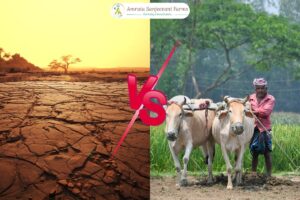
Organic farming is a framework that avoids or excludes the use of synthetic or engineered inputs (such as chemicals, fertilizers, pesticides, feed added substances etc) and to the greatest degree possible depends upon crop rotation, crop residues, animal manures, off-farm organic waste and biological system of nutrient mobilization and plant protection.
Organic Farming started to respond to the environmental suffering caused by chemical pesticides and synthetic fertilizers. It is a new system of agriculture that repairs, maintains, and improves the ecological balance.
Providing crop nutrients indirectly using relatively insoluble nutrient sources which are made available to the plant by the action of soil micro-organisms
Advantages of Organic farming
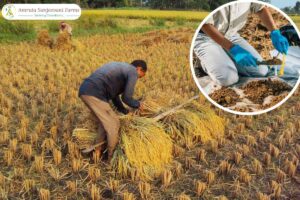
- Organic farming protects long term fertility of soils by maintaining organic matter levels, encouraging soil biological activity and careful mechanical intervention.
- Organic farming provides crop nutrients indirectly using relatively insoluble nutrient sources which are made available to the plant by the action of soil micro-organisms
- Enables nitrogen self-sufficiency through the use of legumes and biological nitrogen fixation, as well as effective recycling of organic materials including crop residues and livestock manures
- Organic farming enables weed, disease and pest control relying primarily on crop rotations, natural predators, diversity, organic manuring, resistant varieties and limited (preferably minimal) thermal, biological and chemical intervention.
- Ensures extensive management of livestock, paying full regard to their evolutionary adaptations, behavioral needs and animal welfare issues with respect to nutrition, housing, health, breeding and rearing.
- Organic farming ensures careful attention to the impact of the farming system on the wider environment and the conservation of wildlife and natural habitats
- Organic products are more nutritional, tasty, and good for health to chemical and fertilizer utilized products.
Disadvantages of Organic farming
- Organic agricultural products are low in the early years. Farmers find it difficult to accommodate mass production
- Organic farming in Bangalore has fewer choices, and off-season crops are limited.
- The main disadvantage of organic farming is the lack of marketing of the products and Inadequate infrastructure
Organic Farming methods
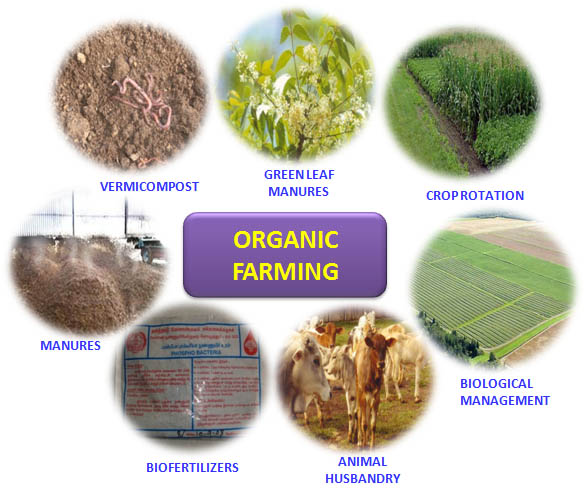
Organic farming in Bangalore is an approach which combines the best of traditional and modern farming technologies mixed with scientific knowledge. For this it applies simple, Eco-friendly techniques and utilizes the natural resources for crop production. Some of the common techniques used in organic farming are –
- Vermi compost
- Green leaf manures
- Crop Rotation
- Natural Manures
- Bio fertilizers/ Fertilizers
- Animal husbandry
- Biological Management
Organic Farming Principles
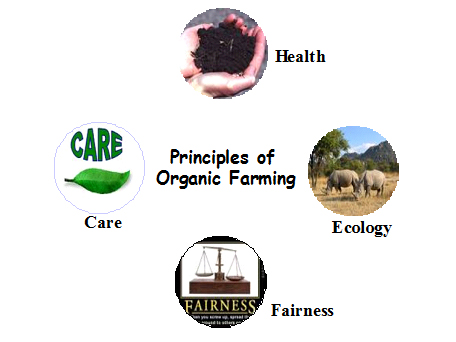
- Principle of ecology
- Organic farming should be based on living ecological systems and cycles, work with them, emulate them and help sustain them
- This principle roots organic agriculture within living ecological systems.
- Production is to be based on ecological processes and recycling
- Nourishment and well-being to be achieved through the ecology of the specific production environment
- Organic management must be adapted to local conditions, ecology, culture and scale.
- Inputs should be reduced by reuse, recycling and efficient management of materials and energy in order to maintain and improve environmental quality and conserve resources.
- Organic farming should attain ecological balance through the design of farming systems, establishment of habitats and maintenance of genetic and agricultural diversity.
- Principle of health
- Organic farming should sustain and enhance the health of soil, plant, animal, human and planet as one and indivisible
- Healthy soils produce healthy crops that foster the health of animals and people.
- Health is the wholeness and integrity of living systems. The role of organic farming, whether in operations, processing, distribution, or consumption, is to sustain and enhance the health of ecosystems and organisms from the smallest in the soil to human beings.
- Principle of care
- Organic farming should be managed in a precautionary and responsible manner to protect the health and well-being of current and future generations and the environment.
- Organic farming is a living and dynamic system that responds to internal and external demands and conditions.
- Precaution and responsibility are the key concerns in management, development and technology choices in organic farming.
- Principle of fairness
- Organic farming should build on relationships that ensure fairness with regard to the common environment and life opportunities.
- Conduct human relationships in a manner that ensures fairness at all levels and to all parties, farmers, workers, processors, distributors, traders and consumers
- Aims to produce a sufficient supply of good quality food and other products.
- Natural and environmental resources that are used for production and consumption should be managed in a way that is socially and ecologically just and should be held in trust for future generations
- Fairness requires systems of production, distribution and trade that are open and equitable and account for real environmental and social costs.
Steps of Organic farming
Organic farming approach involves following five steps:
- Conversion of land from conventional management to organic management.
- Management of weeds and pests by better management practices, physical and cultural means and by biological control system.
- Crop production with the use of alternative sources of nutrients such as crop rotation, residue management, organic manures and biological inputs.
- Management of the entire surrounding system to ensure biodiversity and sustainability of the system.
- Maintenance of live stock in tandem with organic concept and make them an integral part of the entire system.
Conclusion
Organic farming consultant in Bangalore is one of the beneficial farming approaches. Some countries have made a lot of effort to support organic farming. They have given subsidies to the farmers. In the upcoming days, traditional farming method will be replaced by the organic farming methods.