
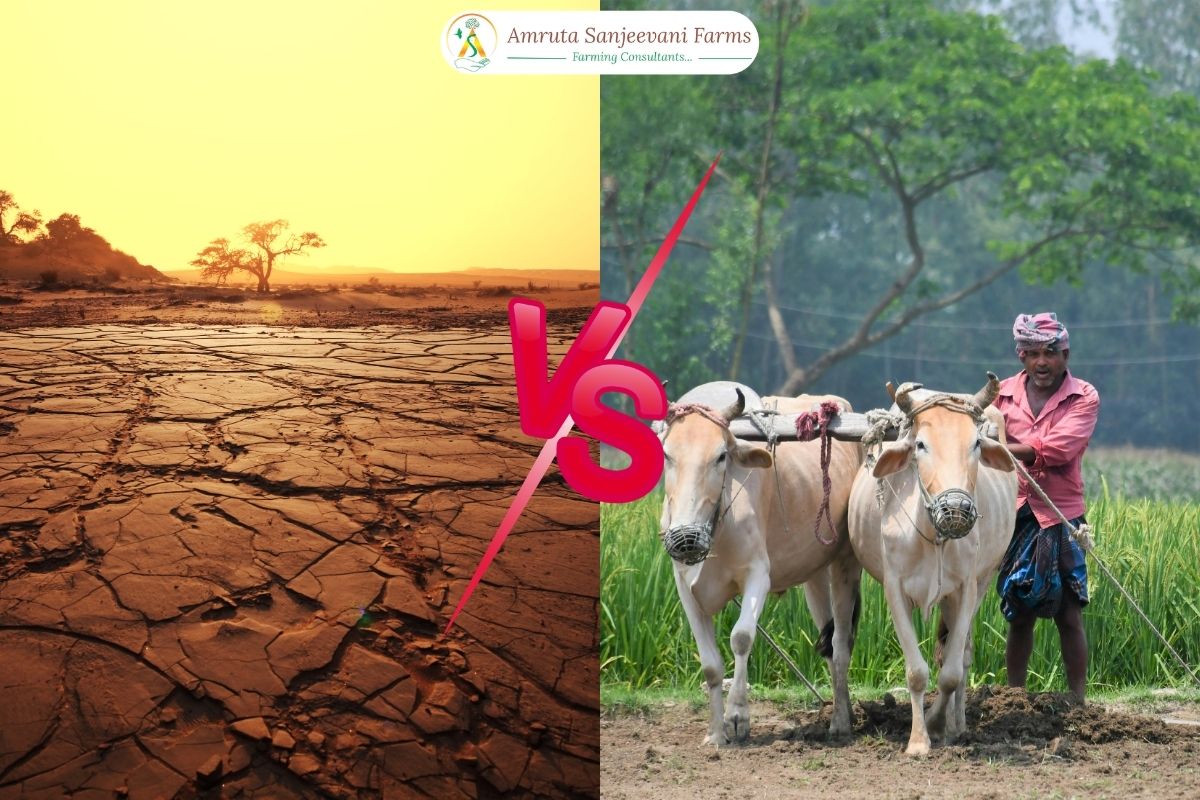
Turning a piece of dry, unused land into a working farm may sound tough at first, but honestly it’s very possible. Many people think barren land means no future, but with right planning and small smart steps, that same land can start giving regular income. You don’t need to be a farmer by birth, just patient and willing to learn.
Step-by-Step Guide to Convert Barren Land into a Profitable Farm
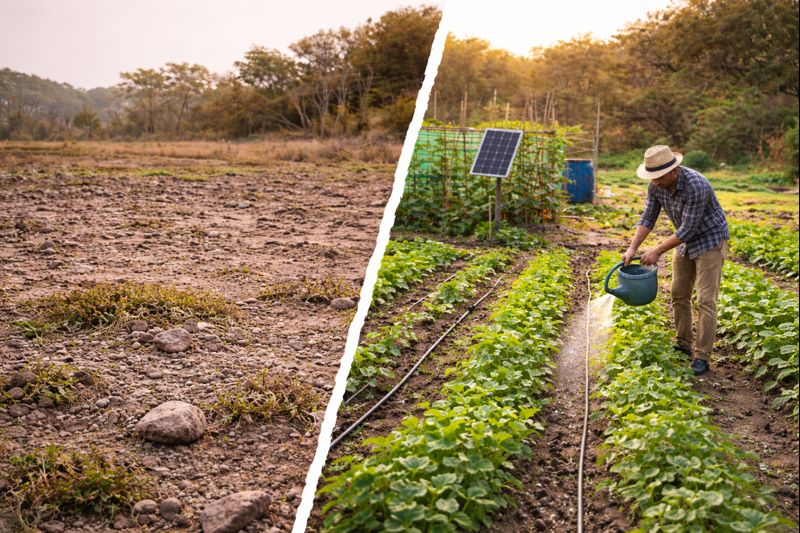
1. Start With Proper Land Assessment (Don’t Skip This Part)
Before doing anything on land, first understand what you actually have. Many people directly start planting or fencing and later regret it. Land assessment helps you save money and time.
Check the land location, access road, nearby water source, electricity availability and slope of the land. Sloping land may need leveling or terrace farming. Flat land is easier but water drainage should be checked properly.
Soil testing is very important here. Even barren looking soil can be fertile inside. A basic soil test will tell you about pH level, organic carbon, nitrogen, phosphorus and potassium. This data helps you decide which crops will work best and what soil treatment is needed.
Also check legal clarity of land. Make sure land records are clear, boundaries fixed and no dispute exists. It sounds boring but later this thing saves headache.
2. Soil Preparation Is Where Real Farming Starts
Most barren lands are not dead, they are just neglected. Soil needs some care before it can support crops.
First step is clearing unwanted bushes, stones and debris. Then comes deep ploughing to loosen hard soil. Hard soil blocks root growth and water absorption. After ploughing, add organic matter like farmyard manure, compost, vermicompost or green manure.
Organic matter improves soil structure slowly but permanently. Chemical fertilizers may give fast results but they don’t repair soil health in long term.
If soil is too acidic or alkaline, gypsum or lime can be added as per soil report. Don’t guess here, always follow recommendation.
Mulching is another simple but powerful method. It keeps soil moisture, controls weeds and improves fertility over time. Dry leaves, straw or plastic mulch can be used.
3. Farm Fencing: Protection Comes Before Plantation
Many people ignore fencing initially and later face heavy losses. Open land attracts animals, trespassers and even theft.
Choose fencing based on location and budget. For village side areas, barbed wire or chain link fencing works fine. In forest or animal-prone areas, solar fencing is a better option though cost is higher.
Fence should be strong enough and installed before plantation. Gates should be lockable and placed in right direction for vehicle entry.
Fencing also gives clear land boundaries and increases land value. It makes farm look organized and professional, which is important if you plan future expansion.
4. Smart Irrigation Planning Saves Money Every Year
Water is the backbone of farming. Poor irrigation planning leads to crop failure even on fertile land.
First identify water source – borewell, open well, river, canal or tanker. Based on water availability, decide crop type. Water-heavy crops on limited water source is a big mistake many beginners make.
Drip irrigation is best for most crops today. It saves water, reduces weed growth and delivers water directly to roots. Sprinkler irrigation works well for vegetables and lawns.
Plan irrigation layout properly so every plant gets equal water pressure. Filtration unit is important to avoid pipe blockage.
Rainwater harvesting can also be added. Even small farm ponds help recharge groundwater and reduce dependency on borewells.
5. Choosing the Right Crops Makes All the Difference
This is where profitability actually comes. Crop selection should never be emotional or trend-based.
Choose crops based on soil type, climate, water availability and market demand. Short-term crops like vegetables give quick returns but need more care. Long-term crops like fruit trees need patience but give stable income later.
You can also do mixed farming. For example, fruit plantation with vegetables or pulses in between rows. This improves income during early years.
Always study local market. Growing something which has no buyer nearby will create problems. Contract farming options can also be explored.
Native and climate-suitable crops usually perform better and need less maintenance.
6. Plan Farming in Phases, Not All at Once
Many new farm owners invest everything at once and then struggle. A better way is phased development.
Start with soil improvement and fencing. Then irrigation. After that plant crops in sections. Learn from first season and improve in next.
This approach reduces risk and helps you understand land behavior across seasons.
7. Maintenance, Monitoring and Small Improvements
Farm is not a one-time setup. Regular monitoring is needed.
Check plant health, pest attacks, water flow and soil moisture regularly. Early detection saves crop.
Use organic pest control methods as much as possible. They are safer and cheaper long term.
Keep records of expenses and yields. This helps you understand which crop is profitable and which is not.
8. Turning Farming Into a Business Mindset
Farming becomes profitable when treated like a business, not hobby.
Calculate cost per crop, expected yield, selling price and profit margin. Explore value addition like packaging, grading or direct selling.
Over time, your barren land becomes not just green but income generating.
FAQs
1. Can barren land really be converted into a farm?
Yes, most barren lands just lack care. With soil treatment, water planning and right crops, they can become productive farms.
2. How much time does it take to see profit?
Short-term crops can give returns in 3–6 months. Long-term plantations take 2–4 years for stable income.
3. Is soil testing really necessary?
Yes, without soil testing you are guessing. It helps choose correct crops and soil improvement methods.
4. Which irrigation system is best for beginners?
Drip irrigation is best as it saves water, reduces effort and works for most crops.
5. Should I do farming myself or hire experts?
If you are new, expert guidance helps avoid costly mistakes and speeds up success.
Conclusion
Barren land is not useless, it’s just waiting for the right plan. With proper assessment, healthy soil, good fencing, smart irrigation and correct crop selection, any land can turn profitable. Farming needs patience, not luck. Start slow, learn every season and your land will slowly start giving back more than you expected.