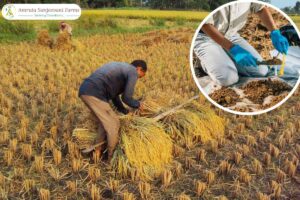

Starting farming for the first time feels exciting, but honestly it can also be confusing. Many new farmers jump in with big hopes and investments, but small planning mistakes slowly turn those dreams into stress. Most of these mistakes are not because people are lazy, but because they don’t get proper guidance at the beginning. The good thing is, almost every mistake can be avoided if you understand what usually goes wrong and plan smartly from day one.
Top 10 Common Farming Mistakes and How to Avoid Them
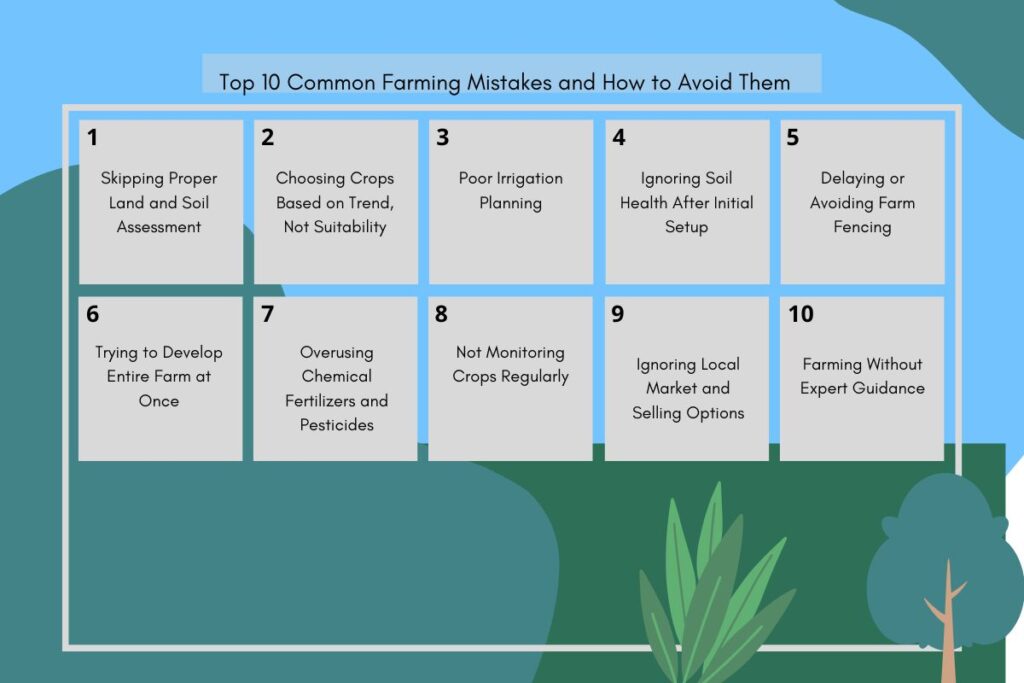
1. Skipping Proper Land and Soil Assessment
One of the biggest mistakes new farmers make is assuming all land behaves same. Just because nearby land is fertile doesn’t mean yours is too.
Without soil testing, you don’t know nutrient levels, pH balance or soil texture. This leads to wrong fertilizer use and poor crop growth.
How to avoid:
Always do soil testing before plantation. Use results to plan crops and soil improvement methods instead of guessing.
2. Choosing Crops Based on Trend, Not Suitability
Many first-time farmers choose crops just because someone else is making money from it. This is risky.
Every crop needs specific soil, water and climate. Trend-based farming without understanding suitability leads to low yield or complete failure.
How to avoid:
Choose crops based on soil report, local climate and water availability. Market demand matters, but land compatibility matters more.
3. Poor Irrigation Planning
Water mismanagement is a silent killer in farming. Either too much water or too little water damages crops badly.
Some farmers install irrigation after plantation, which creates uneven water flow and weak root development.
How to avoid:
Plan irrigation system before planting. Use drip or sprinkler based on crop type. Ensure equal water distribution.
4. Ignoring Soil Health After Initial Setup
Many farmers focus on soil only in first season. After that, they forget it completely.
Continuous cropping without soil care reduces fertility and increases dependency on chemicals.
How to avoid:
Add organic compost regularly, practice mulching and avoid excessive chemical fertilizers.
5. Delaying or Avoiding Farm Fencing
Open farms face losses from animals, theft and trespassing. New farmers often delay fencing to save money.
This usually results in crop damage and higher losses later.
How to avoid:
Install fencing before plantation. Choose fencing type according to location and animal threat.
6. Trying to Develop Entire Farm at Once
Beginners often invest everything at one time. If something goes wrong, recovery becomes difficult.
Large-scale setup without experience increases risk.
How to avoid:
Develop farm in phases. Start small, learn from one season, then expand gradually.
7. Overusing Chemical Fertilizers and Pesticides
Fast results tempt many farmers to overuse chemicals. Initially crops may look good, but soil health suffers badly.
This leads to pest resistance, poor soil life and higher expenses.
How to avoid:
Use balanced nutrition. Combine organic inputs with minimal chemical usage. Try natural pest control options.
8. Not Monitoring Crops Regularly
Some new farmers plant crops and then check farm occasionally. Farming needs regular attention.
Small issues like pests or water blockage become big problems if ignored.
How to avoid:
Visit farm regularly or assign someone reliable. Early detection saves crops and money.
9. Ignoring Local Market and Selling Options
Growing good crops is not enough if selling plan is weak. Many farmers struggle because they didn’t plan where to sell.
Transport cost and middlemen reduce profit.
How to avoid:
Study local markets, mandi prices and possible direct selling options before crop selection.
10. Farming Without Expert Guidance
First-time farmers often depend on neighbors or random online videos. This creates confusion.
Every farm is different and generic advice doesn’t always work.
How to avoid:
Consult experienced farming professionals or agriculture consultants. Expert guidance reduces costly mistakes.
FAQs
1. Is farming difficult for beginners?
Farming is not difficult, but it needs planning, patience and right guidance to avoid losses.
2. Which mistake causes maximum loss in farming?
Poor irrigation planning and wrong crop selection usually cause biggest losses.
3. Can mistakes be corrected later?
Some mistakes can be corrected, but early planning always saves more time and money.
4. Is expert consultation really necessary?
Yes, especially for first-time farmers. It helps avoid trial-and-error losses.
5. How long does it take to understand farming properly?
Usually 2–3 seasons give good practical understanding if you observe and learn properly.
Conclusion
Every successful farmer was once a beginner who made mistakes. The difference is, smart farmers learn early and correct fast. Avoiding common mistakes like poor irrigation, wrong crop choice and ignoring soil health can save years of struggle. Farming rewards patience and planning. When you start with right foundation, your farm grows stronger with every season instead of becoming a burden.